 The Wind Labs
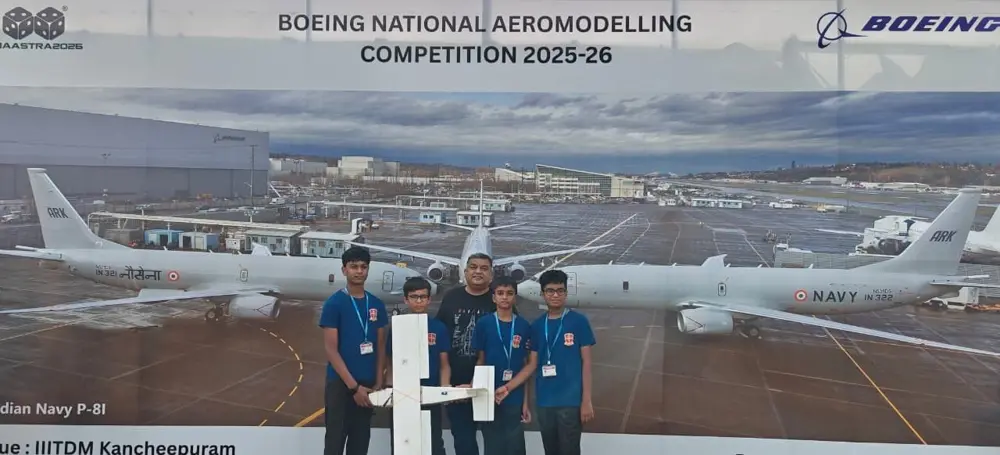
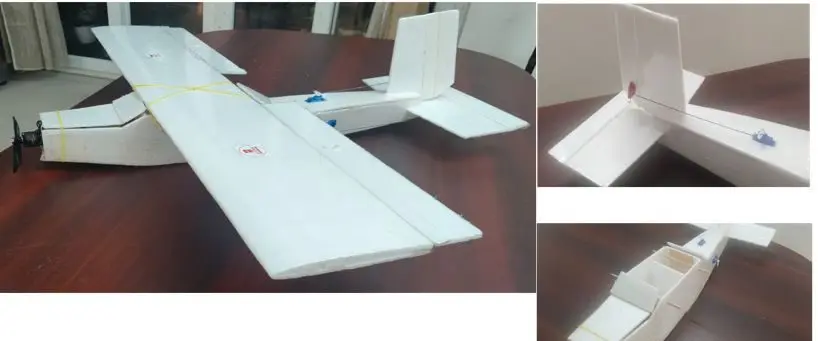
Four school students built this plane.
Scroll, and you will build it too. Then you get to throw it.
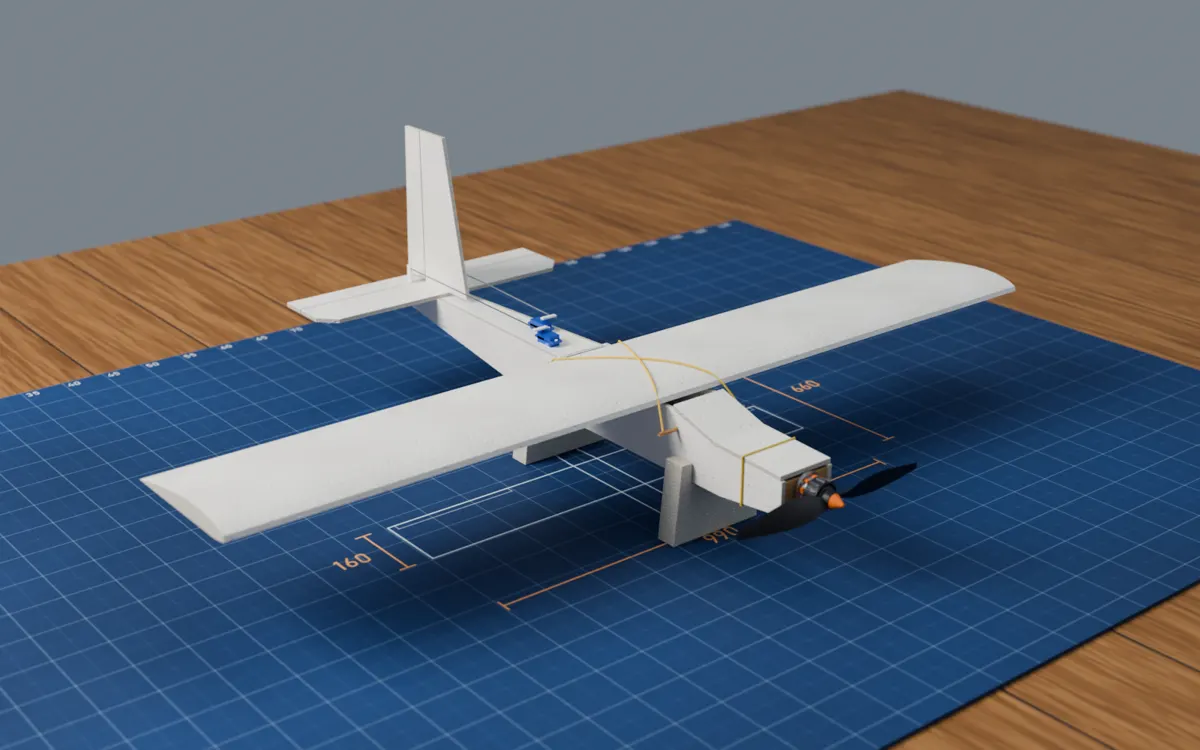
Build KALAM
Fold the box
A floor and two sides of foam board. On its own a sheet flops. Folded into a box, it can carry a plane.
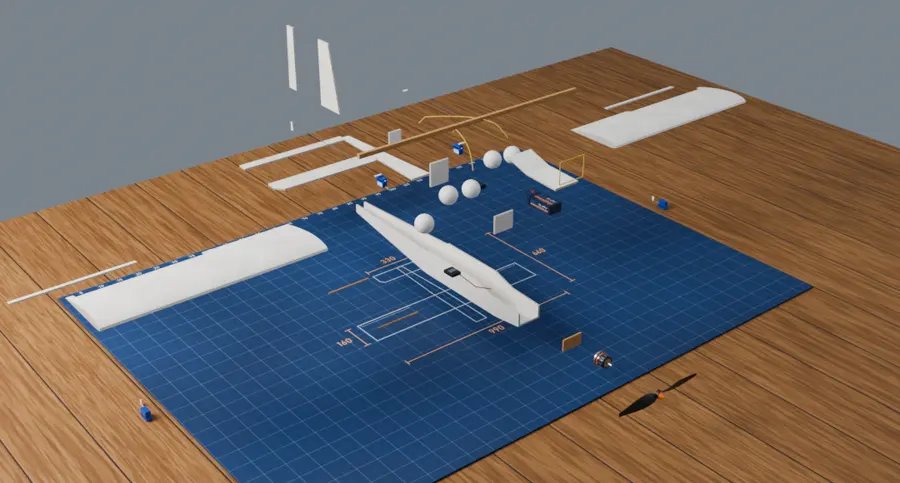
Stiffen it
Cross-walls stop the box twisting. A wooden firewall up front gives the motor something solid to pull on.
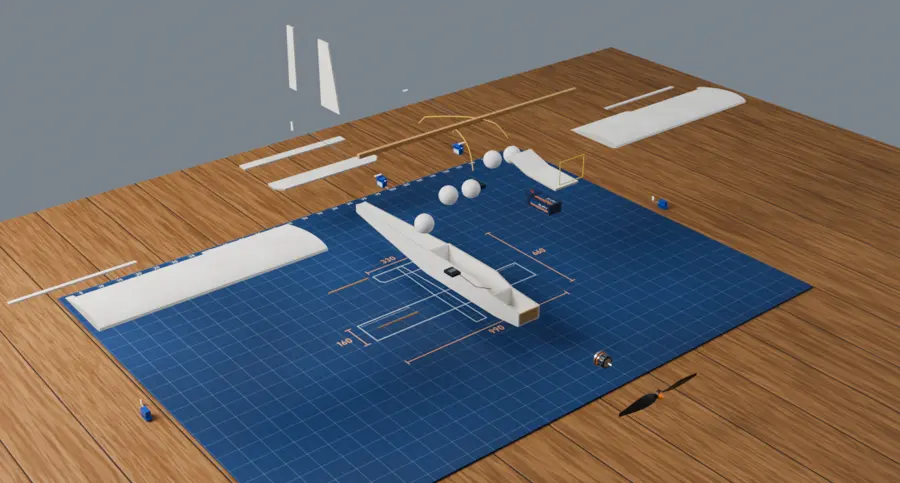
Give it a tail
The tailplane is 330 by 85 mm, the fin stands 180 mm tall. They work like the feathers on an arrow.
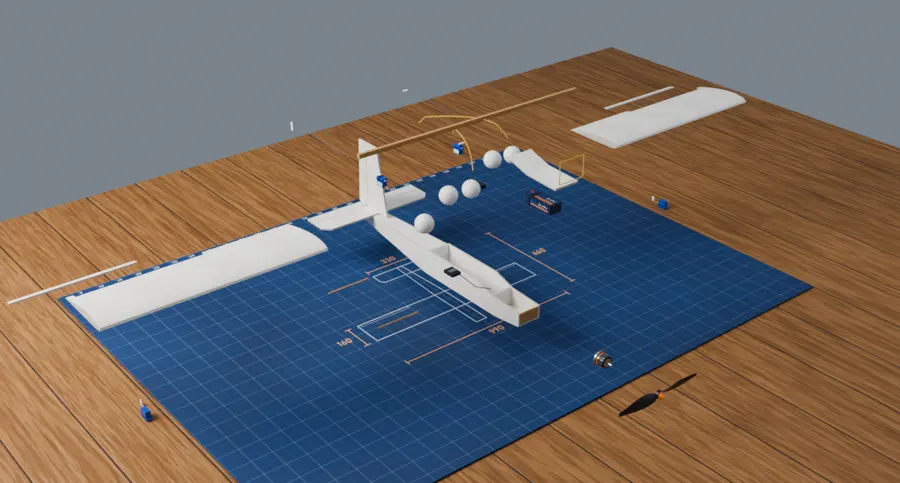
Add the pull
A 12 volt motor spins the propeller. A propeller is a small wing going round and round.
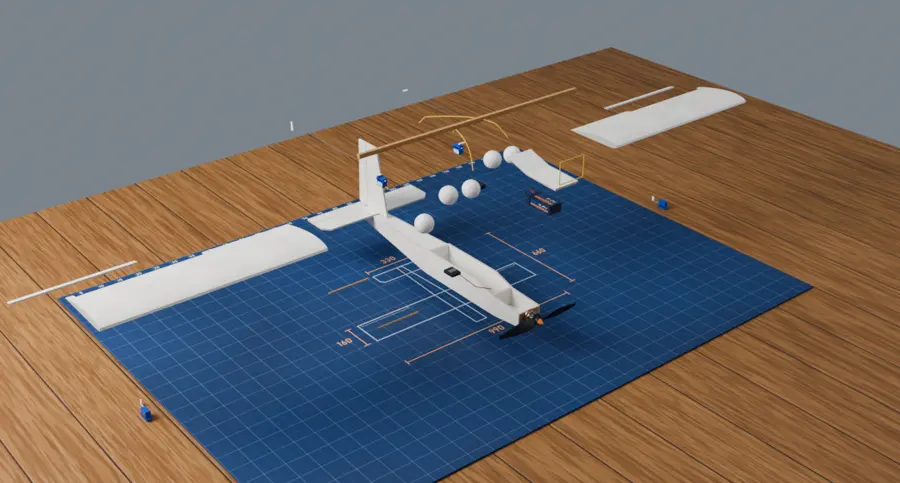
Wire the nerves
The receiver hears your stick, the servos turn, the pushrods move the tail. The battery feeds all of it.
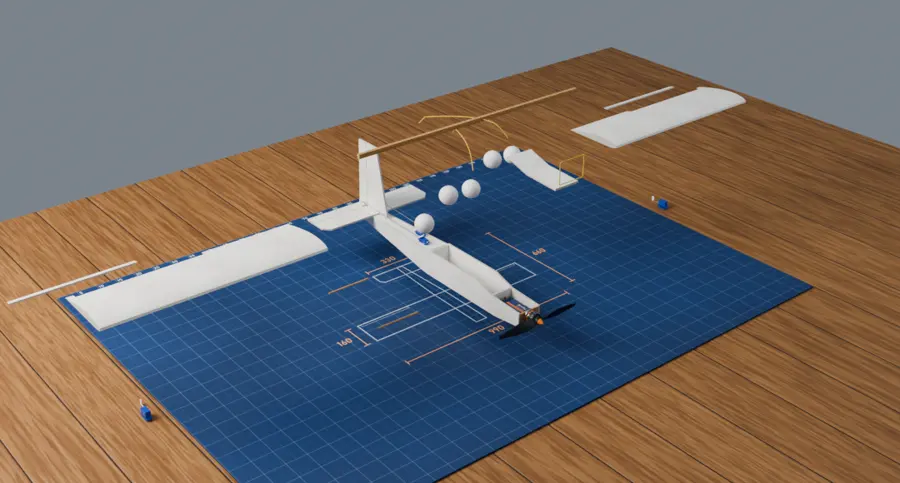
Load five golf balls
Really. KALAM carried five of them, 46 g each, 230 g in all. They sit where the plane balances.
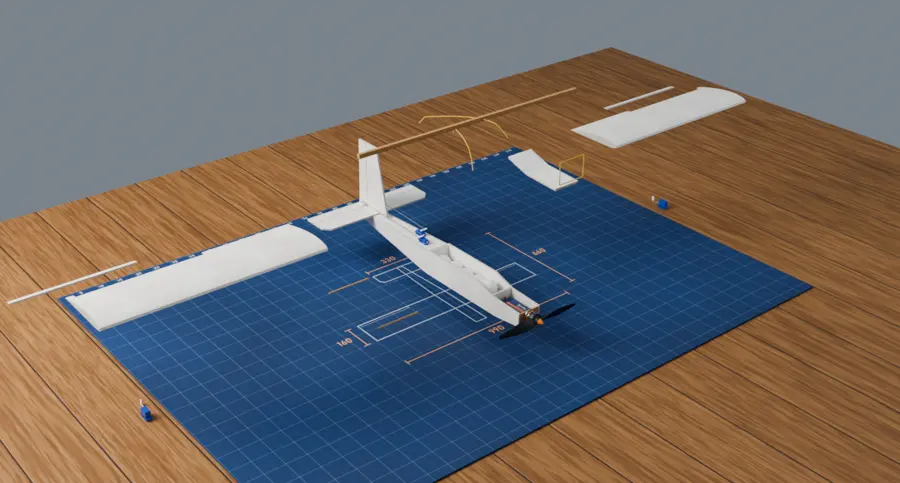
Put the wing on
990 mm from tip to tip, 160 mm front to back. The curve on top is what makes it fly.
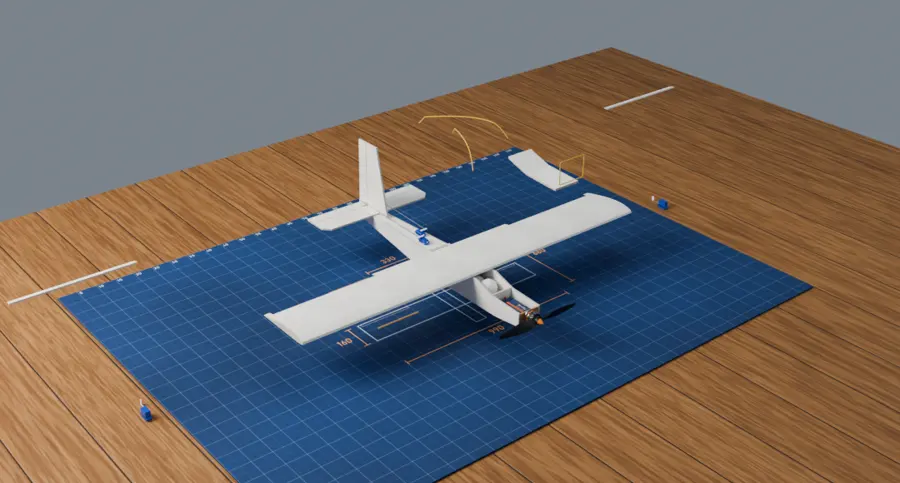
Hinge the ailerons
One goes up, the other goes down, and the whole plane rolls. Each is 275 mm long.
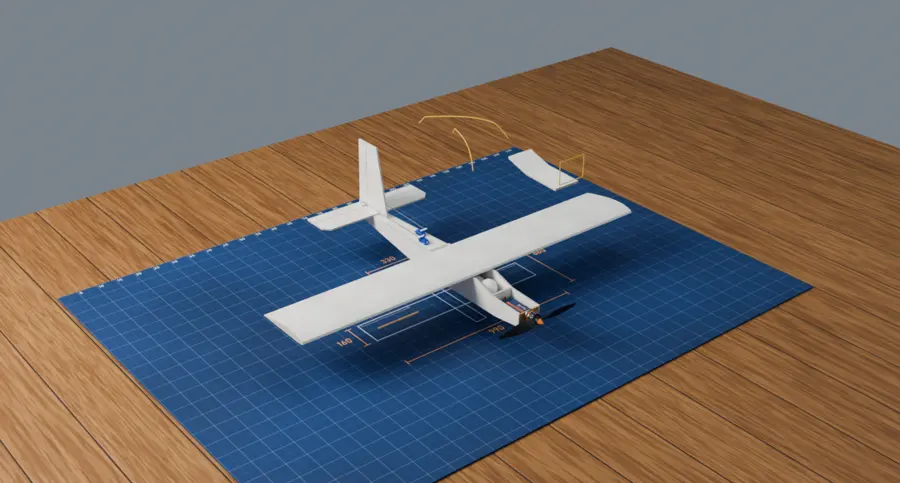
Rubber-band it
No glue on the wing. In a crash the bands let go, the wing pops off, and you fly again after lunch.
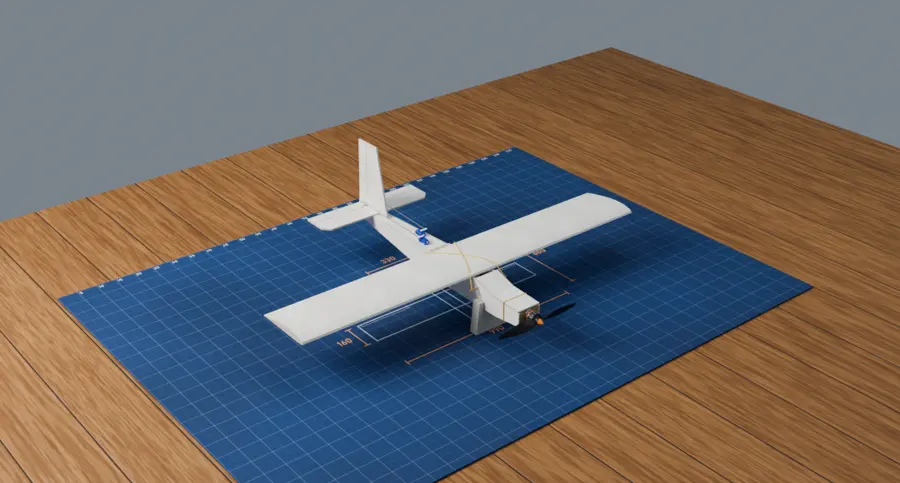
published spec read off a photo our guess
Make it balance
A plane has to balance about a quarter to a third of the way back along its wing. Slide the battery until it sits level. Then find one spot that works with and without the golf balls.
Total mass and golf balls are the published figures. How the mass is spread along the plane is our estimate.
Which surface does it?
Roll left.
Click the moving part on the plane, or use a button.
No wheels. Somebody has to throw it.
Where innovation takes flight
500+ enthusiasts trained and coached, from primary-school kids to budding aviators.
Level 1, starter
Chuck gliders
An entry-level course for budding aviation enthusiasts. No motor, no radio. Just you, some balsa and the air.
- Introduction to aeromodelling
- Theory of flight
- Build and fly a chuck glider
Level 2, motorised
Multirotors
Your first motorised aircraft: how a quadcopter is designed, flown and used.
- Structure and flight dynamics, and how they differ from fixed-wing
- Electronics, sensors and mission planner software
- Hovering and stabilisation in practice
- Rules and compliance
- Defence applications and careers
What you leave with
You can identify, design, choose components for and assemble a multirotor to suit a mission. This unit also introduces AI modules in drones.
Level 3, fixed-wing
RC planes
Electric fixed-wing flight. The stepping stone to advanced drone technologies.
- Electric propulsion and basic avionics
- Control surfaces, pairing and calibration
- Battery management
- Safety rules as per DGCA
- Basic flight training
What you leave with
You can assemble, maintain and test-fly a basic RC aircraft with an instructor. Flying solo needs further training and practice.
The youngest team on the field
Four students from a Chennai school took KALAM to the Boeing National Aeromodelling Competition at IIT Madras. They flew it alongside IIT students, without a sign of nerves.
The Wind Labs coordinated and mentored the team, led by Vibhu Mathur.
KALAM's spec sheet
| Wingspan | 990 mm |
|---|---|
| Wing chord | 160 mm |
| Fuselage | 660 mm |
| Tailplane | 330 x 85 mm |
| Fin height | 180 mm |
| Aileron, each | 275 x 15.5 mm |
| Empty mass | 670 g |
| Payload | 230 g, 5 golf balls |
Flown for ISRO and HAL
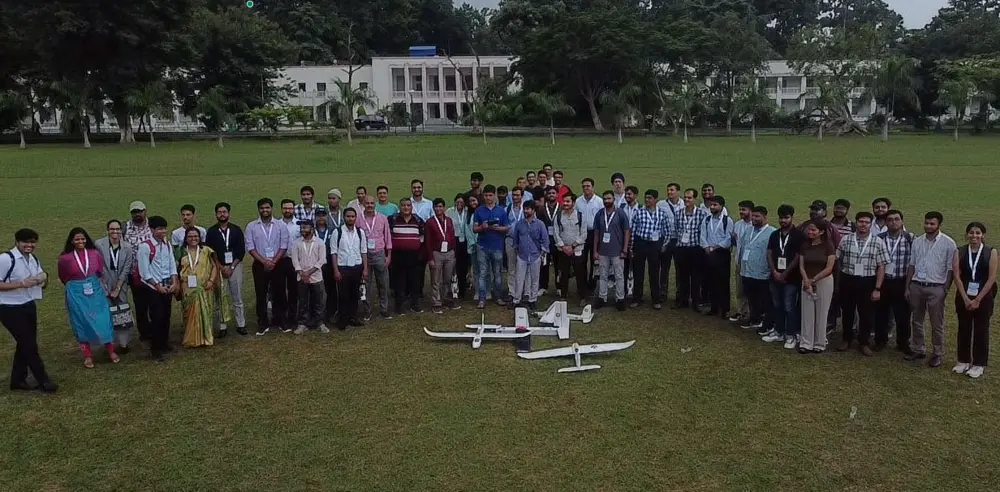
UAVs built by BIT Mesra students were test-flown in front of then ISRO Chairman Dr S. Somanath and scientists from HAL and ISRO.
- Drones designed and developed for defence, now in service
- Airshows for scientists from HAL and DRDO
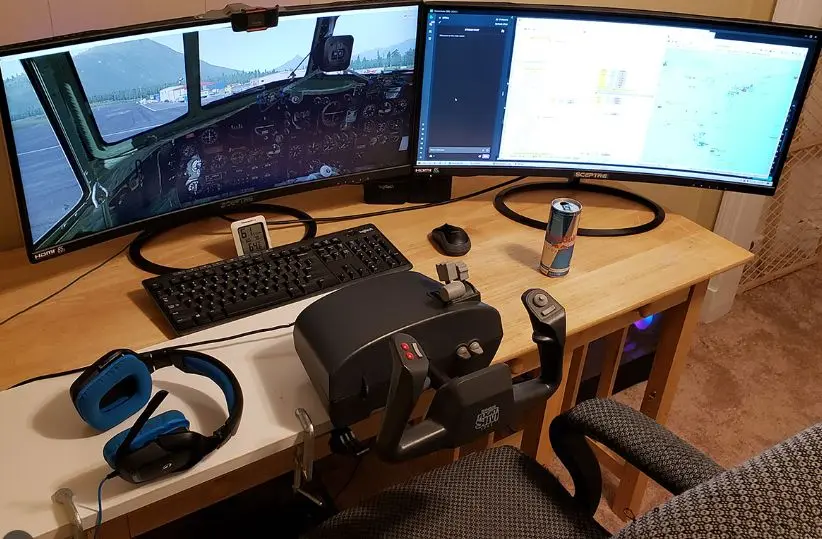
- Aeromodelling and flight-simulation lab set up at BIT Mesra, Ranchi
Who teaches you
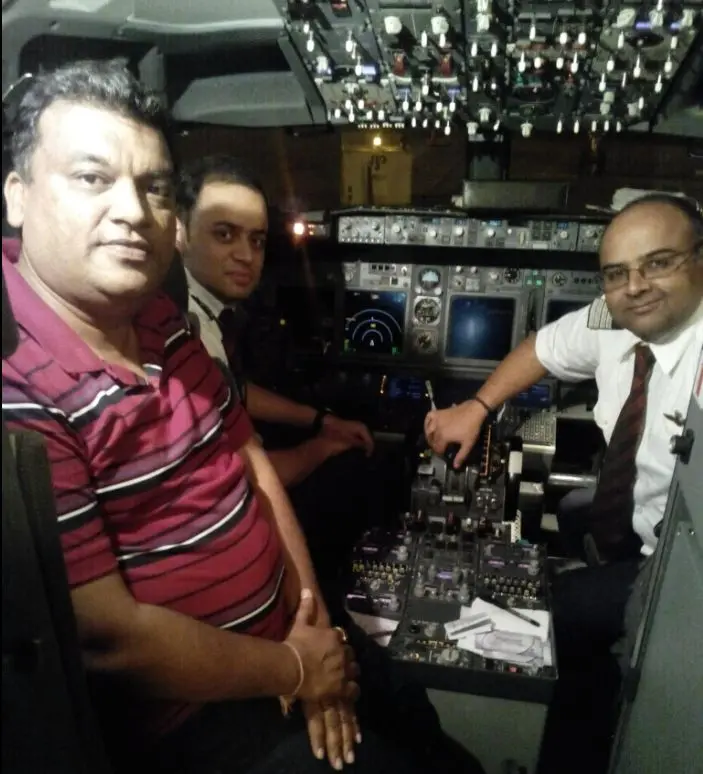
Vibhu Narain Mathur
Lead instructor. Aeronautical engineer with 20+ years in aviation and wind technology, including Pratt & Whitney engines for the A380. Former aircraft maintenance engineer on the Cessna 152 and 172.

Vikram Mathur
Programme leadership. 25+ years with Ford and Honda in automobile and aerospace. ISB alumnus and ICF coach.
Moments from our workshops
Your turn to build one
A workshop for your school, a course for one young innovator, or a full aeronautics lab with tools, simulators, training and flying lessons.
WhatsApp and phone: +91 99406 39170, +91 99991 02120